Florida has a 73-foot waterfall that disappears into a sinkhole, plus 5 other places where water refuses to lie flat
Florida has a reputation for being flat enough to make a pancake jealous. The highways stretch toward the horizon, the beaches seem to go on forever, and most visitors arrive expecting clear springs rather than anything resembling a mountain waterfall.
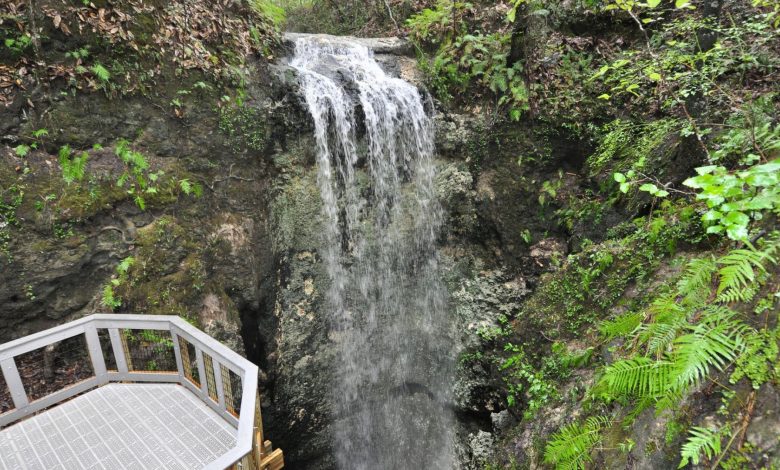
Then a narrow stream in the Panhandle does something thoroughly unexpected. It plunges 73 feet into a limestone hole and disappears from sight.
There isn’t a roaring alpine river behind this surprise. In a dry spell, there might barely be a trickle. But after good rain, the little stream becomes one of the state’s most fascinating natural sights, and the forest around it feels far removed from the usual Florida vacation.
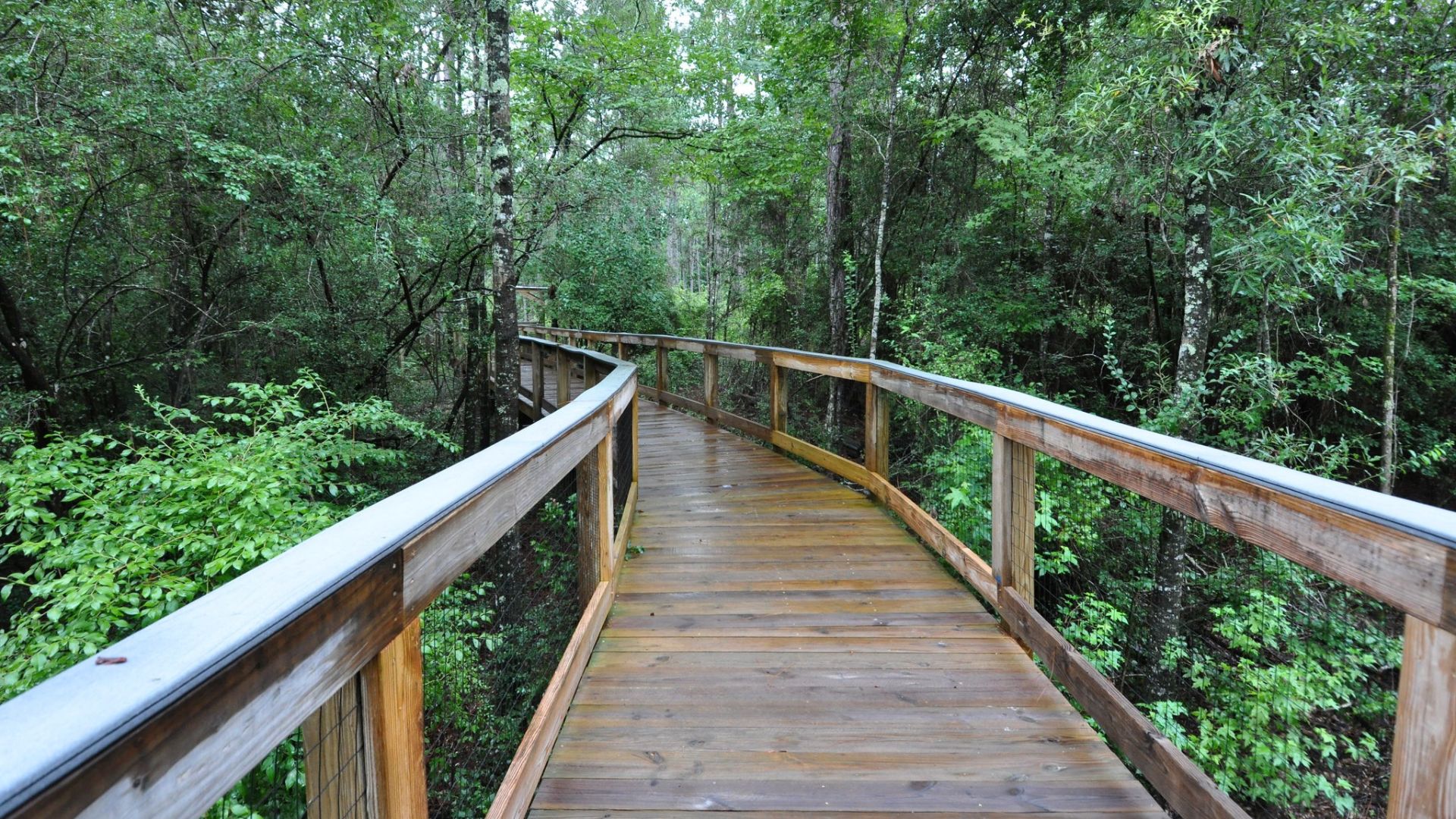
That contrast is reason enough to trade a beach afternoon for a walk among ferns and sinkholes.
Florida’s other waterfalls require a little imagination about what qualifies. Some are modest cascades. One is a stretch of whitewater on the Suwannee River. Another is a collection of deliberately built garden waterfalls left over from the roadside-attraction era.
Each has a different story, and none pretends to be Niagara. That’s part of the pleasure: a state famous for level ground still knows how to surprise people with moving water.
1. Falling Waters State Park in Chipley
The state’s highest waterfall doesn’t tumble over a rocky cliff into a pool where visitors can dip their toes. It drops into Falling Waters Sink, a narrow cylindrical opening in the earth, and seemingly vanishes.
Read also: Florida has two certified dark sky parks, and these 7 places make room for the Milky Way
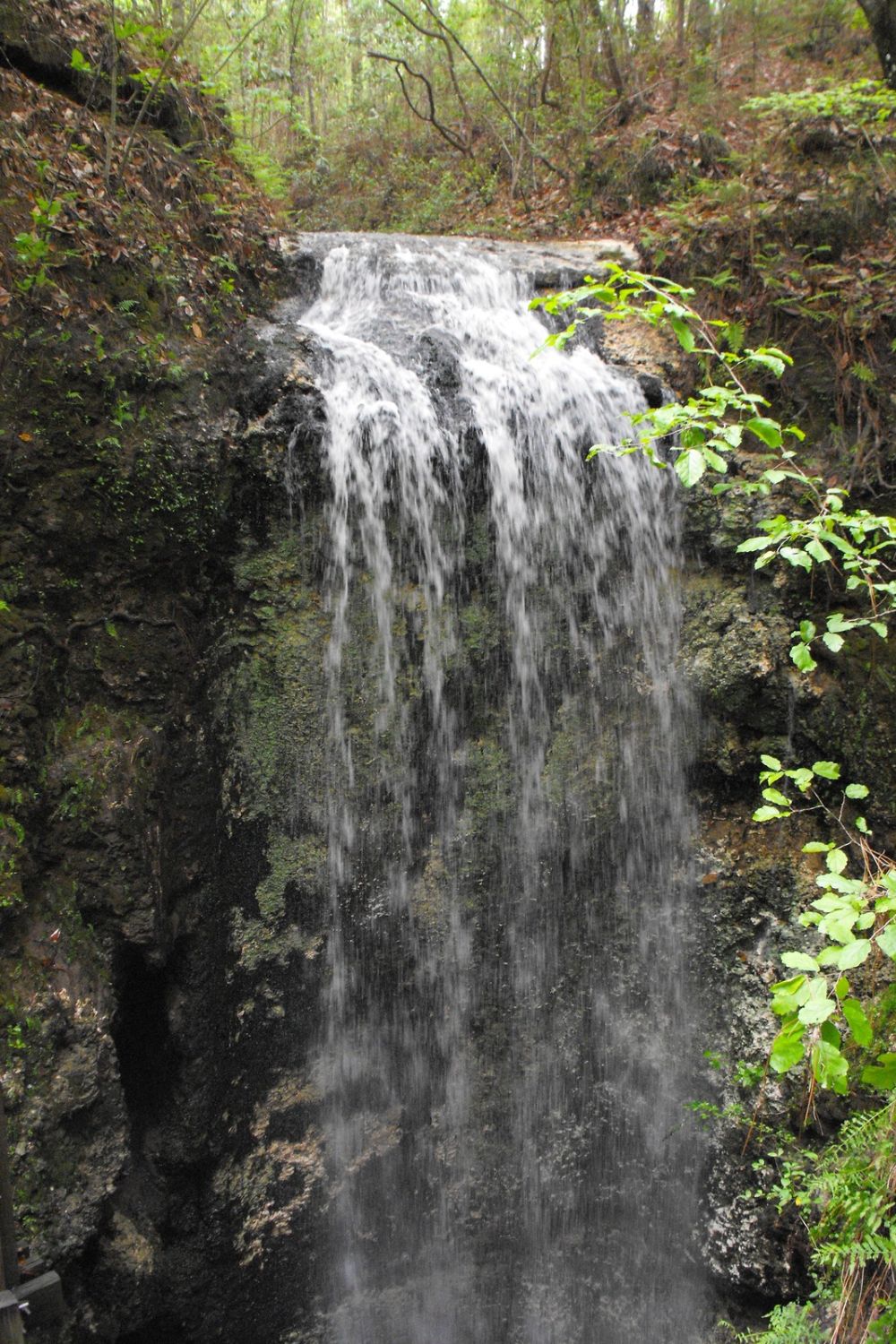
The Florida Park Service describes a stream plunging 73 feet into a limestone shaft about 100 feet deep and 20 feet wide. What happens to that water below ground remains hidden from visitors.
The scene is almost theatrical when recent rainfall has filled the stream. You follow a shaded trail through tall trees and past other sinkholes, then reach viewing platforms beside a startlingly deep opening.
The lower observation point brings you closer to the falling water and its mist. The upper platform offers a wider view of the geology that makes this place so unusual.
It is worth understanding the timing before driving across the Panhandle. The waterfall is powered by rainfall, not by a large, steadily flowing river. During dry weather, the main attraction can shrink to a thin ribbon or stop flowing altogether.
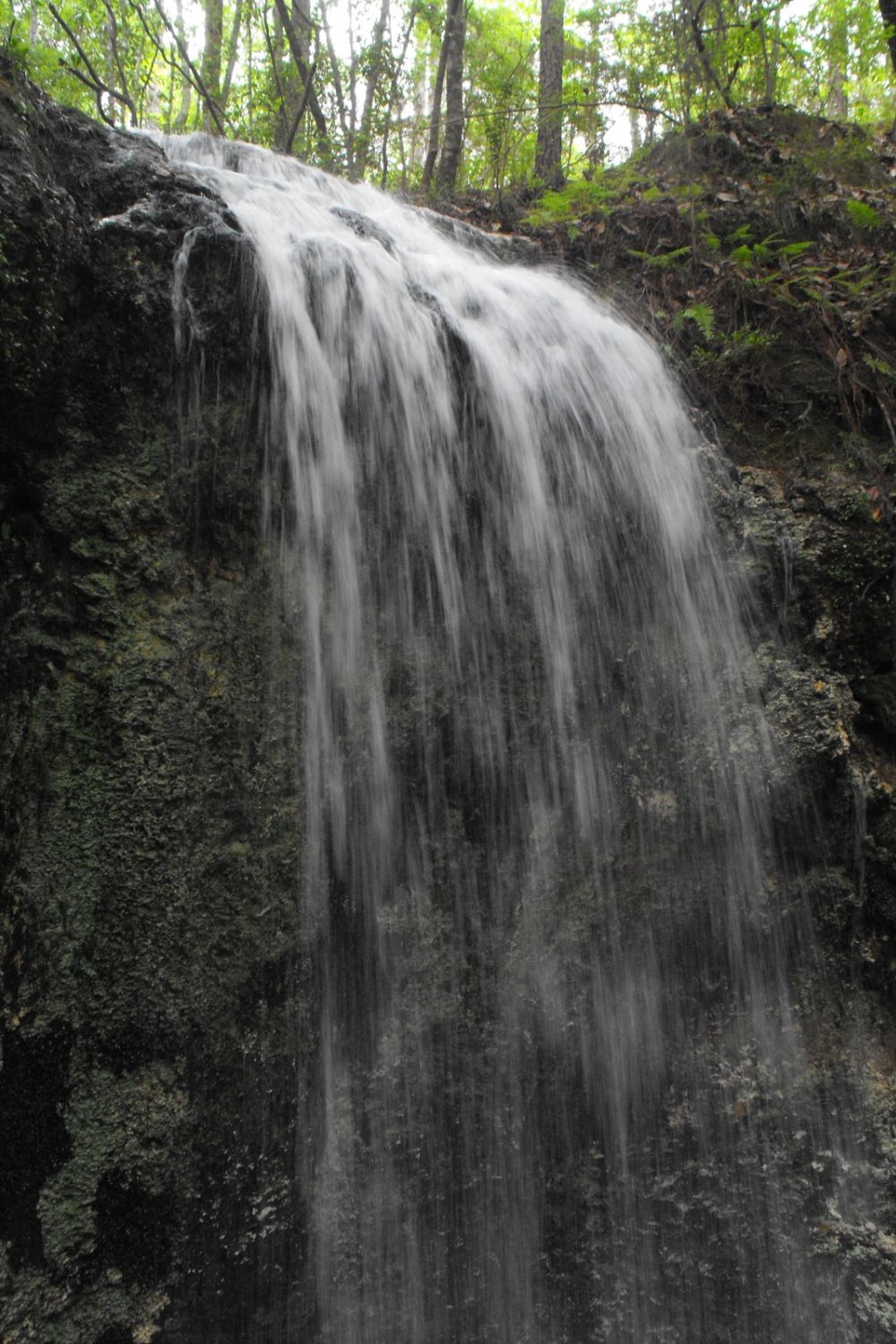
A visit after several rainy days offers a better chance of seeing the full effect. The park encourages visitors to call for water conditions before traveling specifically for the waterfall.
Read also: No bridges to these 7 Florida islands, where the boat ride is part of the escape
Falling Waters State Park sits at 1130 State Park Road, south of Interstate 10 near Chipley. It opens at 8 a.m. and closes at sunset, with a standard $5 entry charge for a vehicle carrying two to eight people.
The grounds also have a lake, picnic facilities, trails and a campground, so a quiet half-day visit can easily become a longer stop.
The surrounding landscape helps explain the strange waterfall. Much of Florida rests on limestone that can dissolve slowly under mildly acidic water. Over long periods, cavities and sinkholes develop. Here, surface water found a vertical passage rather than a conventional river valley. The result feels almost like watching a disappearing act staged by the ground itself.
2. Big Shoals State Park near White Springs
Don’t come to Big Shoals expecting a single tall ribbon of water. Come for the sound of a river refusing to behave like a typical Florida river. As the Suwannee flows across a rocky section, it can churn into the largest whitewater rapids in the state.
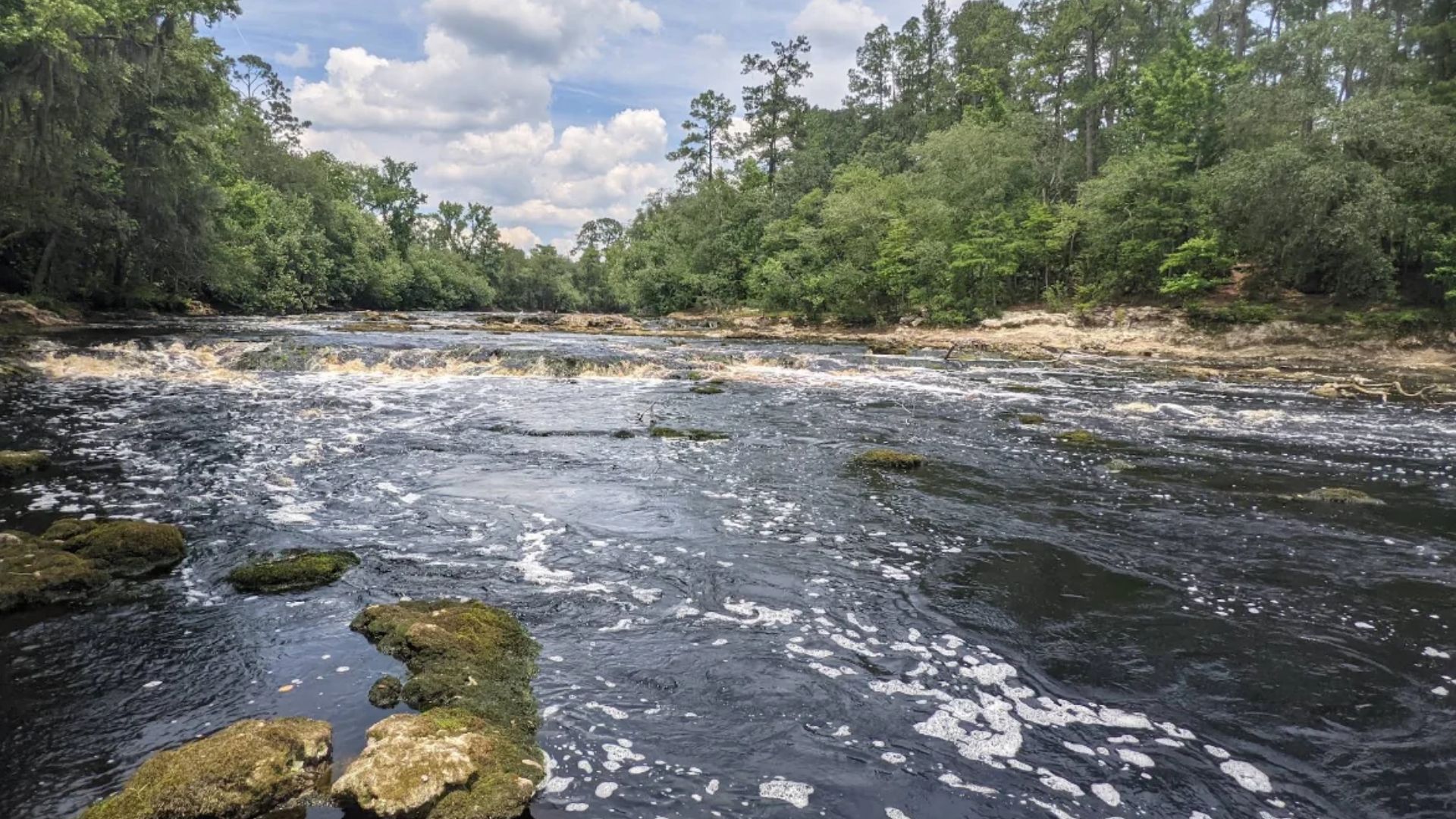
When river levels fall within the right range, park officials classify the rapids as Class III whitewater.
That distinction matters. The water isn’t always equally dramatic, and this is not an invitation for inexperienced paddlers to launch themselves into the current.
The Florida Park Service specifically discourages running the shoals and reserves such conditions for highly experienced paddlers. For most visitors, the best view is safely from shore.
The park also offers a landscape you might not associate with northern Florida: limestone bluffs rising roughly 80 feet above the banks. Wooded trails lead to viewpoints over the river, where the whitewater can become particularly impressive after changes in flow.
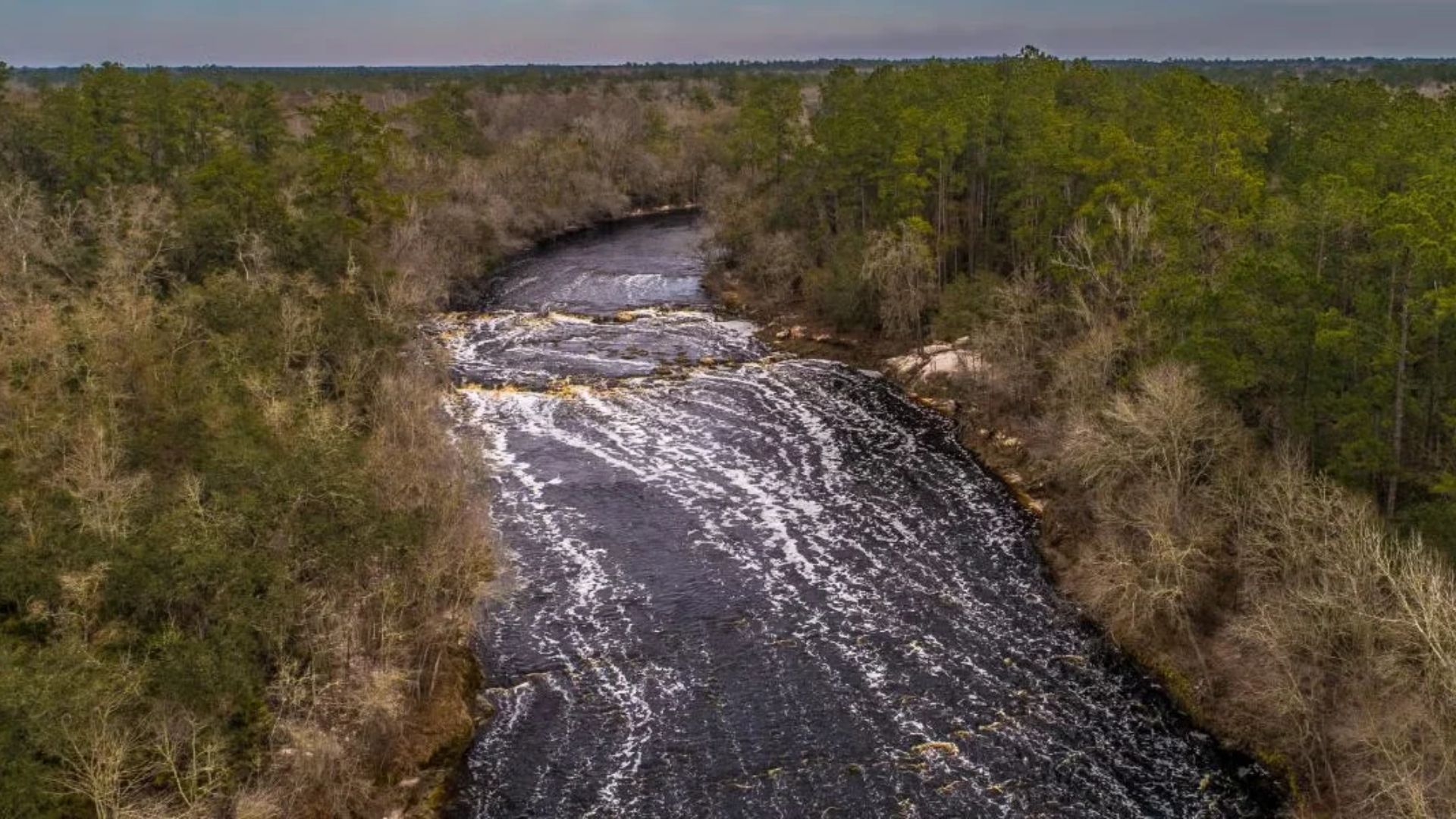
It is a wilder setting than a landscaped waterfall park, with plenty of room to listen to birds and feel the air change beneath the trees.
Big Shoals has entrances along County Road 135 and Southeast 94th Street near White Springs. The current vehicle entry fee is $4, collected through an honor box that requires correct change.
Park hours run from 8 a.m. to sunset. Use the park map before choosing a trail, since the entrances serve different parts of the property and a casual stroll can become a more substantial walk than expected.
The best time is less about the month than the river level. After sustained rainfall upstream, the shoals can have more character, but flooding can also close or complicate trails.
Checking conditions is part of the adventure. Florida may not have many rapids, which makes this stretch of the Suwannee feel especially valuable.
3. Steinhatchee Falls in the Big Bend
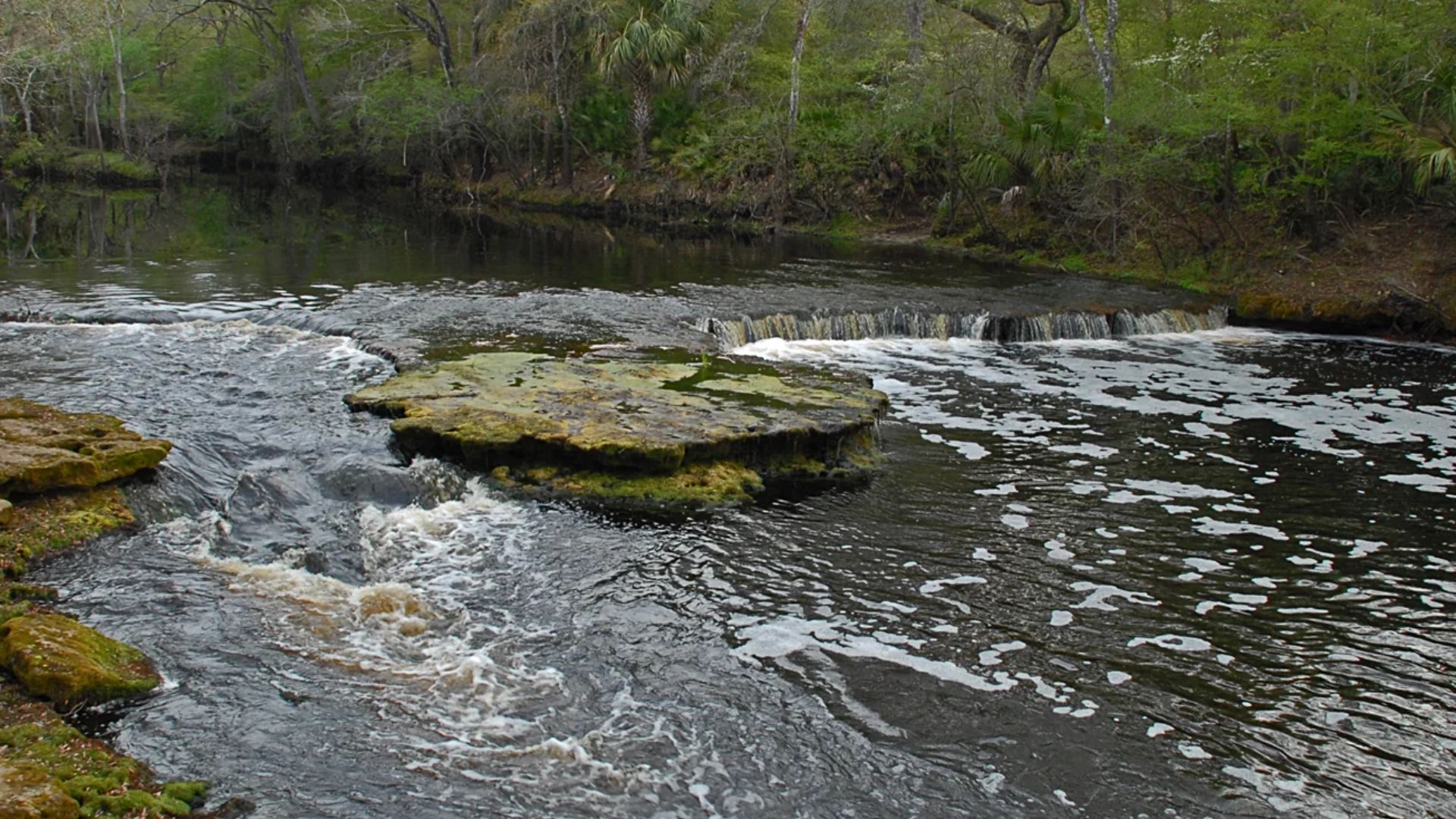
The word “falls” may conjure a dramatic vertical drop, but Steinhatchee Falls takes a different approach. The river spills across a broad, low limestone ledge, creating a restless line of whitewater rather than a towering sheet.
Its fame comes from its width and setting, not height. In a state with few natural waterfalls, that makes it an interesting stop in its own right.
The Steinhatchee River winds through a part of Florida that remains heavily wooded and lightly developed. Around the falls, travelers find the atmosphere of the Big Bend: dark river water, cypress, fishing access and a sense that the landscape is leading the itinerary instead of the other way around.
There is no grand visitor center or line of souvenir shops waiting beside the rapids.
Read also: Gator tail, crab mallets and waterfront tables – 6 Florida fish camps keeping the old ways alive
The broader Steinhatchee Springs Wildlife Management Area is managed cooperatively by Florida’s wildlife agency and the Suwannee River Water Management District. Its public river access points are reached by named roads and graded approaches.
Some routes are rougher than a typical paved park entrance, so a careful look at road conditions is wise after heavy rain. Keep vehicles on designated roads.
The falls can look completely different according to the river’s level. With more water, the broad ledge creates visible turbulence. In other conditions, the river spreads more quietly across the limestone.
Rather than promise a particular spectacle on any given day, treat it as a chance to see a natural river feature that has shaped the surrounding country for generations.
This is a good stop for patient travelers. Bring water, shoes suitable for uneven ground, insect protection and a little extra time. Stay away from slippery ledges and swift water. The appeal isn’t a giant drop; it is watching the river do something unexpectedly lively in an otherwise quiet corner of Florida.
4. Falling Creek Falls near Lake City
Falling Creek Falls is proof that a waterfall doesn’t need to be tall to make a memorable detour. The dark, tannin-colored water moves over a limestone ledge, creating a roughly 10- to 12-foot drop that looks especially appealing after wet weather.
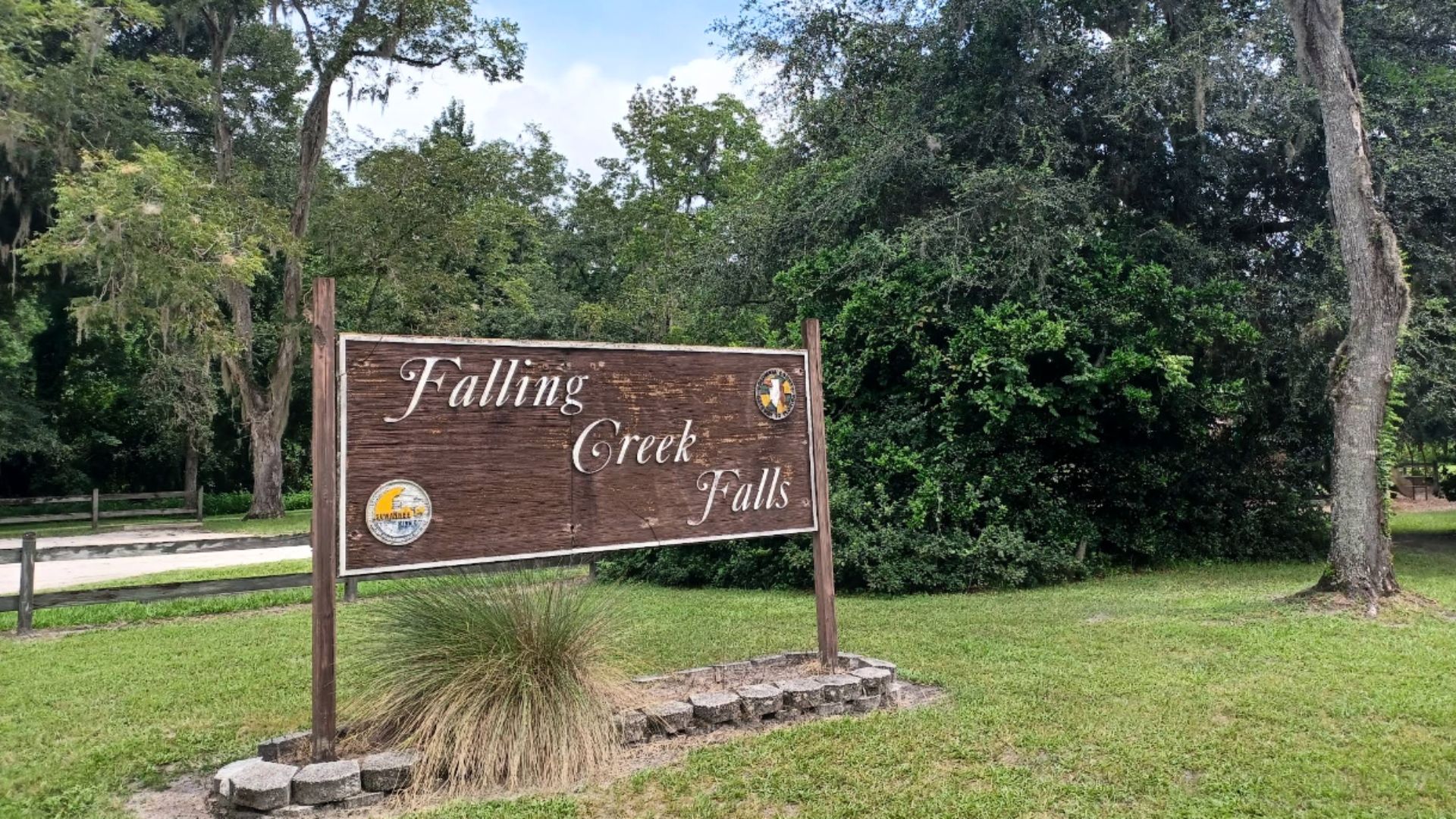
The surrounding greenery gives the scene a sheltered feeling, as though the creek has tucked its small secret away from the highway.
The falls lie in a public recreation area near Lake City in Columbia County. Visitors follow a short, developed walking route with boardwalk sections to reach the view. It is a much more accessible outing than a long backcountry hike, making it an appealing choice for families or anyone who wants a modest stretch of the legs between drives.
Look carefully at the water rather than expecting the bright turquoise color of a spring. Many north Florida creeks carry tannins from leaves and other plant material, which can turn the water a deep amber or tea shade. That color is natural. Against pale limestone and green vegetation, it creates a contrast that is distinctly Floridian.
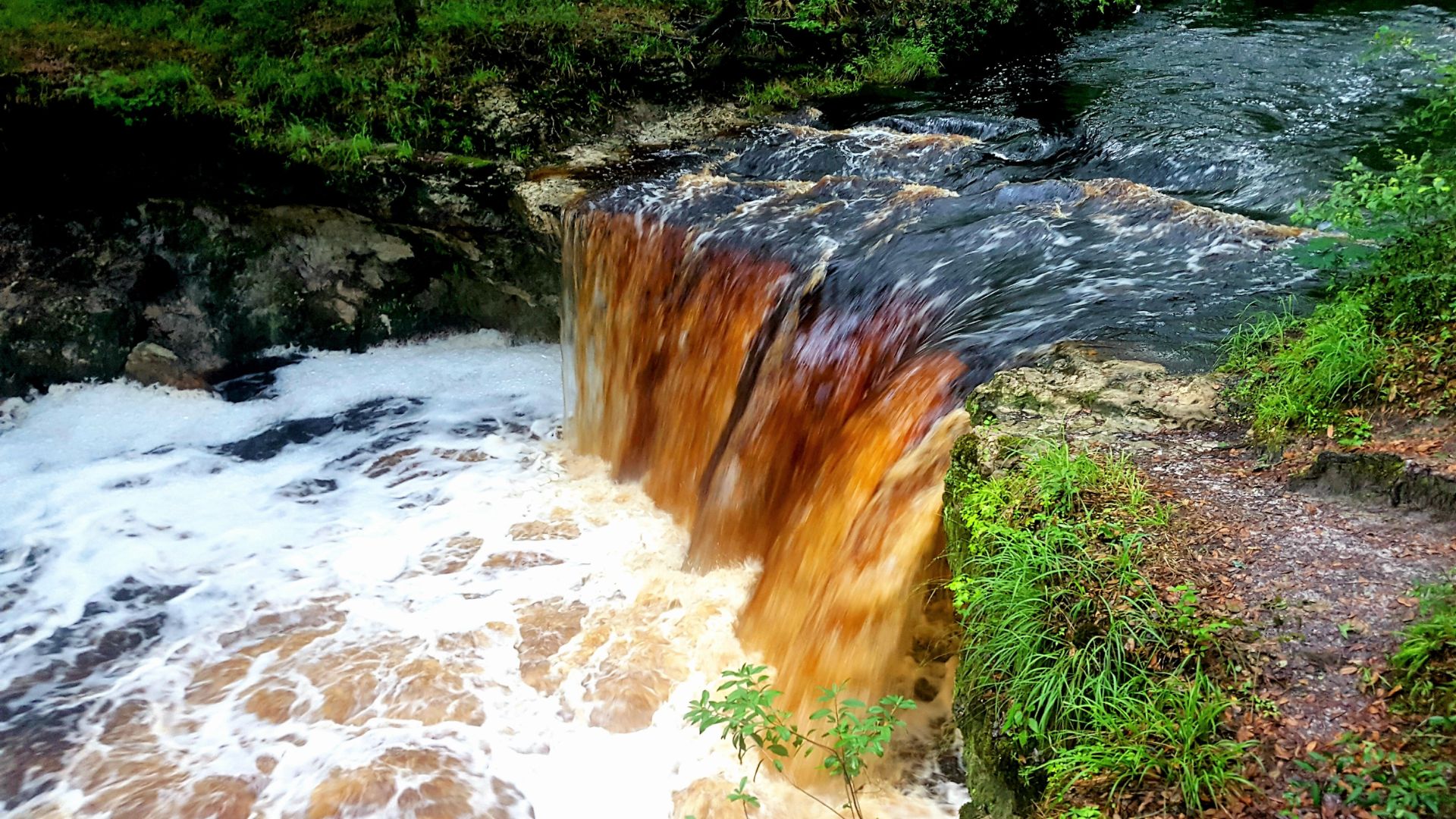
Rainfall remains the key planning detail. In drier periods the flow can diminish, while a recent run of storms can make the cascade fuller and more energetic. Wet wood and limestone can also become slippery. Keep to the maintained paths, and do not scramble to the lip of the drop for a better photograph.
The attraction works best when you let it be small. Stop for the sound of the creek, take in the plants growing along the banks, and appreciate a landscape that rarely gets the publicity of Florida’s coastal attractions. The waterfall may take only a few moments to admire, but the setting encourages visitors not to hurry.
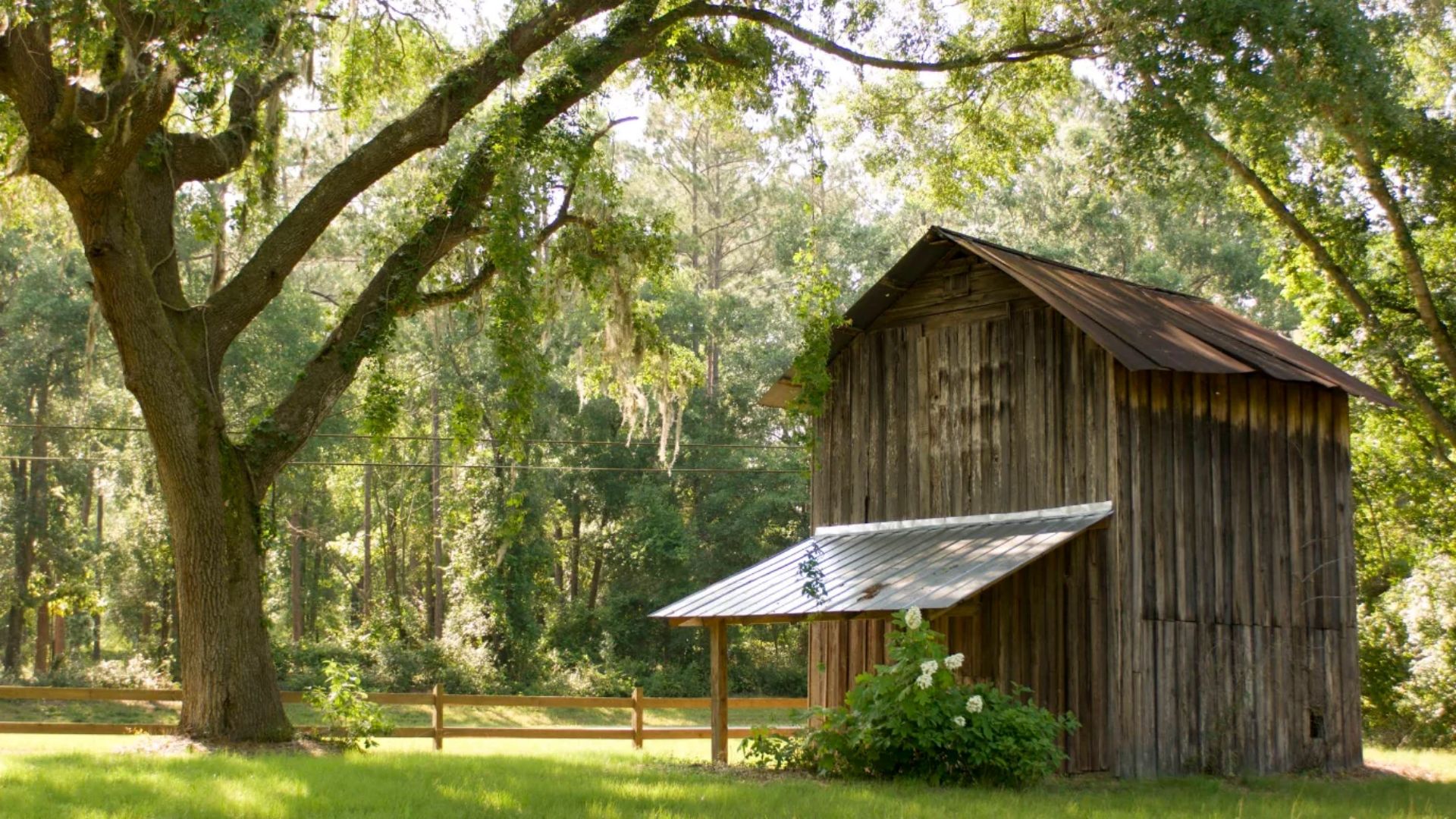
5. Devil’s Millhopper in Gainesville
At Devil’s Millhopper, the water’s movement is only half the story. The real surprise is the hole itself. A vast sinkhole drops about 120 feet into a shaded world of ferns, damp rock and trickling streams. Small cascades slip down the steep sides, turning a geological formation into something that feels like a miniature rainforest.
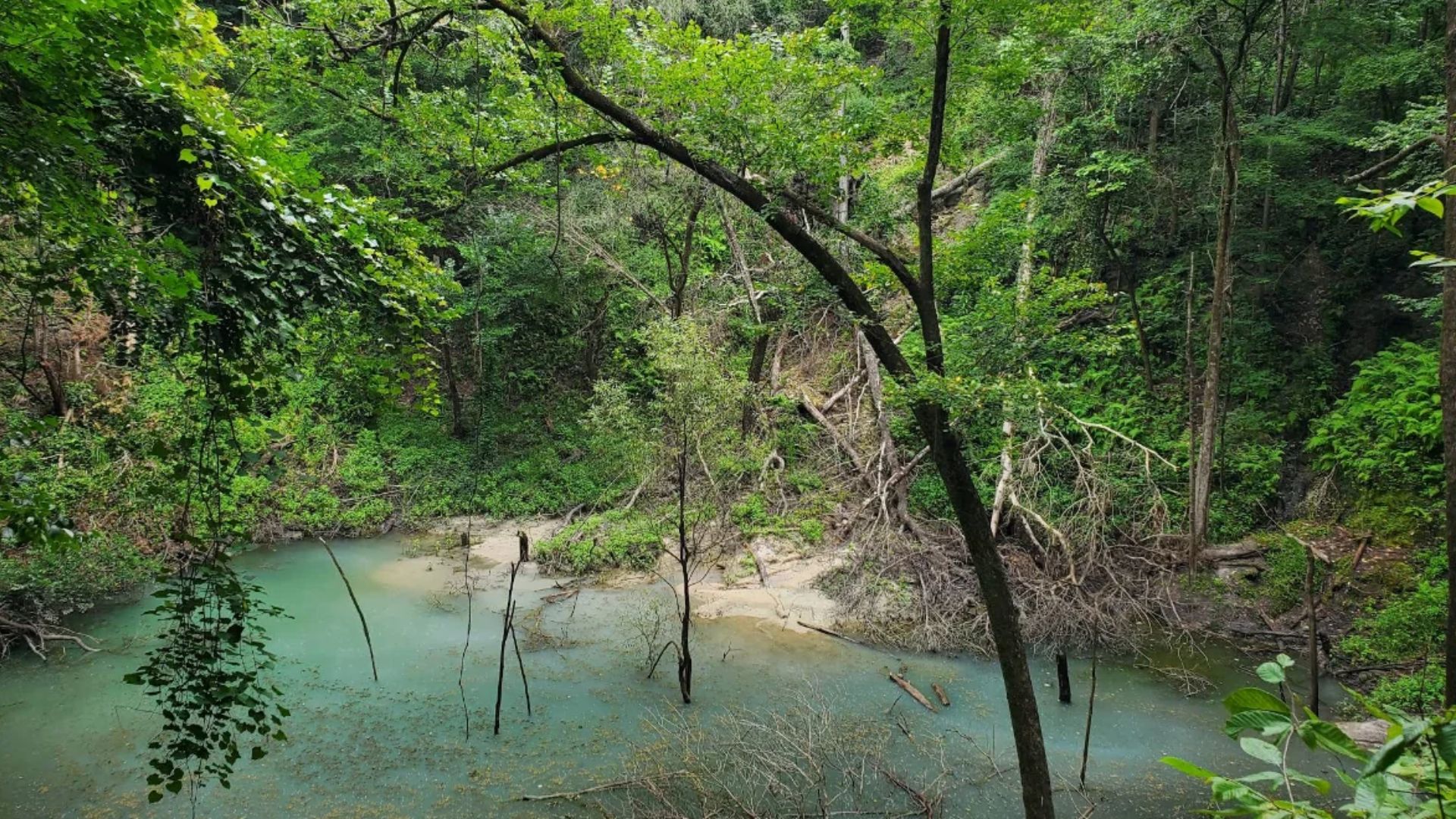
The park’s boardwalk includes 132 steps down toward the sinkhole. That number matters on the return trip: the climb back up can feel considerably longer than the descent. Visitors who prefer not to use stairs can still learn about the site and enjoy portions of the upper walking area, but the lower perspective is what reveals its unusual vegetation and the sound of moving water.
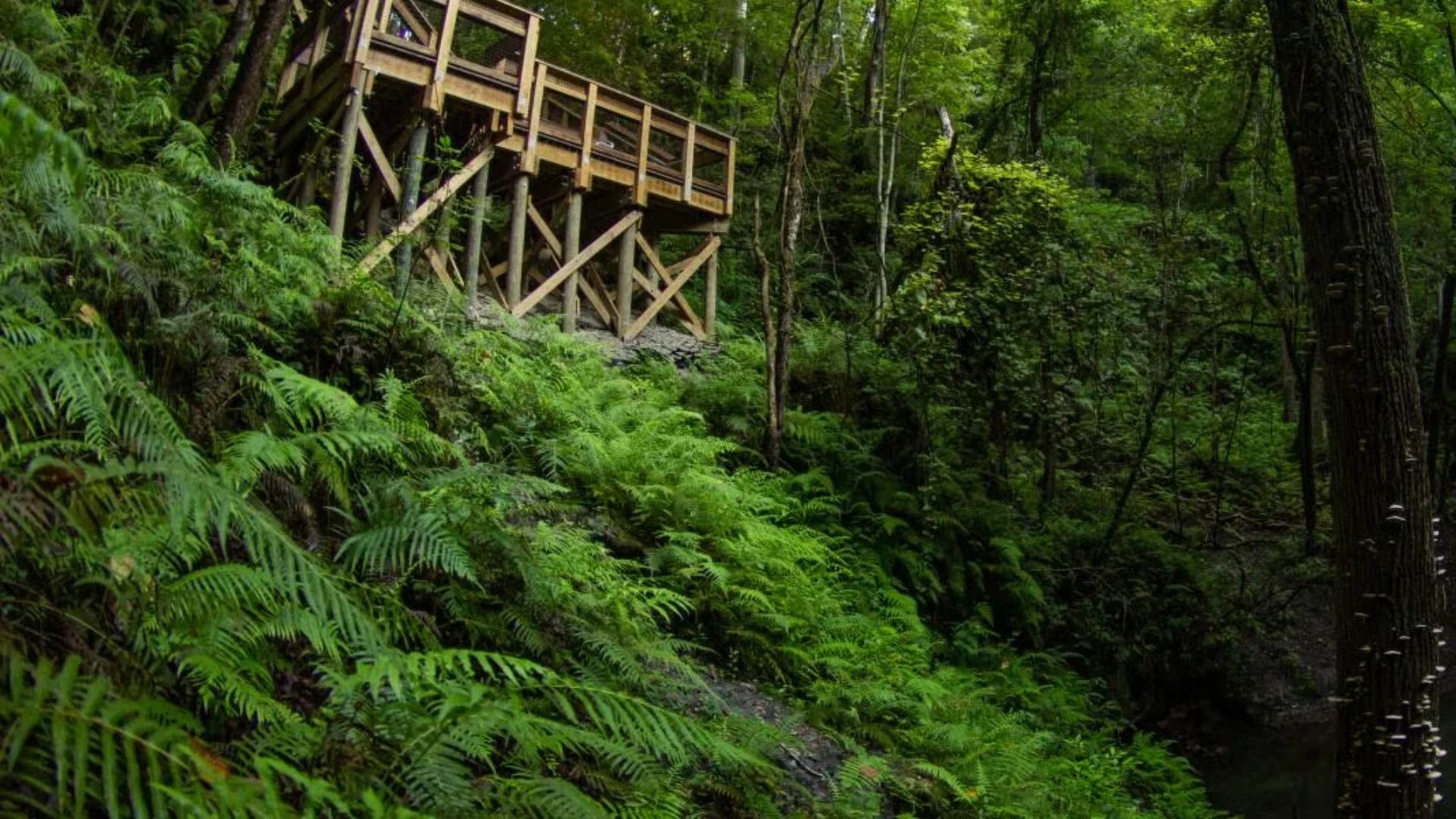
The falls here are not one continuous high plunge. They are small streams and seepages moving down the exposed layers of a collapsed limestone chamber. After rainfall they can be more noticeable, while a dry period changes the experience. That variation makes the sinkhole feel like a living landscape rather than a permanent backdrop.
The park is at 4732 Millhopper Road in Gainesville. It is a geological outing rather than a swimming destination, so plan on walking and observing. Sturdy footwear is more useful than beach sandals, especially after rain. Take time to read the interpretive material; the formation says a great deal about the limestone beneath much of Florida.
One of the loveliest details is the shift in temperature. As you descend beneath the surrounding forest, shade and moisture change the air. Gainesville traffic seems very far away. Sometimes the most memorable Florida waterfall experience is the one that makes you feel as though you’ve walked into an entirely different climate.
6. Rainbow Springs State Park in Dunnellon
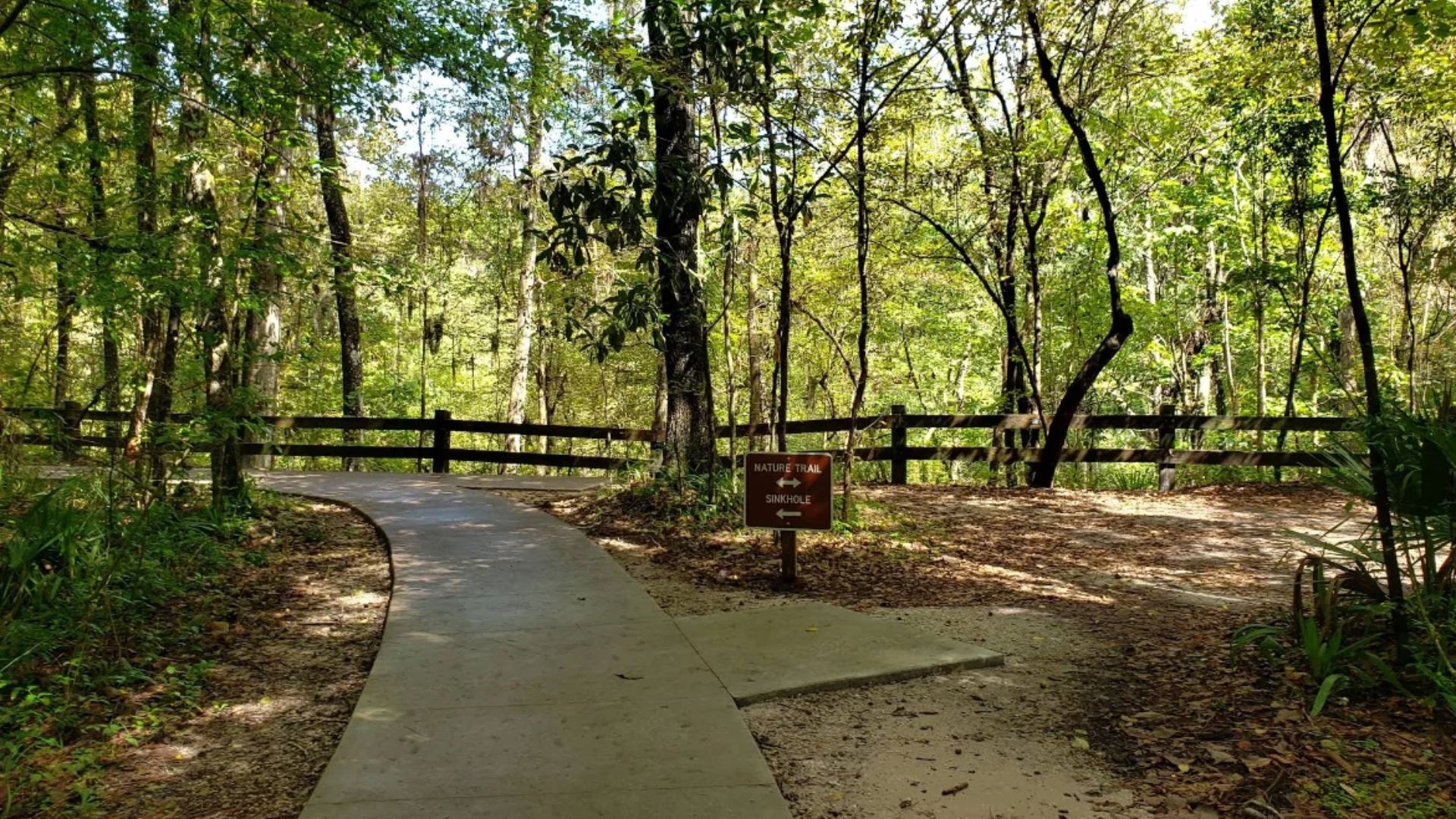
Rainbow Springs deserves an honest introduction: its famous garden waterfalls are human-made. They were built during the site’s decades as a private tourist attraction, using the slopes and old mining landscape around one of Florida’s most impressive natural springs. Today, the state preserves them as part of the property’s cultural history.
That distinction doesn’t make the walk any less pleasant. Water tumbles over landscaped rockwork beneath dense greenery, and winding paths lead through gardens near the headspring. In early spring, azaleas can add striking color. On a cool day, it’s easy to understand why visitors once came here for a carefully designed picture of tropical Florida.
The story began long before the tourist era. People visited the spring for thousands of years, and later the surrounding area saw phosphate mining. By the twentieth century the site had become a roadside attraction with ornamental falls, exotic animals and ambitious features such as underwater viewing boats. The park’s waterfall structures are survivors of that period, not natural cascades secretly hiding in the hills.
Rainbow Springs State Park is at 19158 Southwest 81st Place Road near Dunnellon. Day-use reservations are required under the program introduced in April 2026, and parking is limited during renovations scheduled through early February 2027. Plan ahead rather than arriving on impulse during a busy weekend.
Unlike the sinkholes and wild river features elsewhere in this story, Rainbow Springs combines water, landscaping and Florida tourism history. Walk the garden trails, enjoy the views over the clear spring basin, and think about how the state once sold its natural wonders to passing motorists. The waterfalls are constructed, but the spring feeding this landscape is very real.
When to plan a Florida waterfall road trip
The important question isn’t simply whether a place is open. It’s whether the water is flowing the way you hope. Falling Waters, Falling Creek and the small cascades at Devil’s Millhopper all respond to rainfall. Big Shoals changes with the Suwannee’s level, while Steinhatchee Falls is shaped by the river’s flow. Rainbow Springs’ landscaped falls tell a different story altogether.
A few rainy days can improve a visit, but they can also make roads muddy, trails slick and currents dangerous. That is a good reason to check park notices and weather rather than relying on an old photograph. For casual hikers, cooler months are often more comfortable, provided there has been enough recent rain to bring the water to life.
Build a route around geography instead of trying to tackle all six in one weekend. Falling Waters sits in the western Panhandle, Steinhatchee in the Big Bend, Lake City’s falls and Big Shoals farther north, and Gainesville and Dunnellon toward north-central Florida. Each deserves its own unhurried stop. Most are better appreciated on foot than through a car window.
Bring comfortable shoes, water and the willingness to be surprised by small things. A Florida waterfall might be a thin stream disappearing underground, a river rattling across limestone or a carefully restored relic of roadside tourism. None needs to imitate a mountain cascade. The real reward is discovering how much variety exists in a place everyone thinks they already understand.