
‘Get this done and secure our elections’: Florida Sen. Rick Scott ramps up pressure on Senate as battle over how Americans vote intensifies nationwide
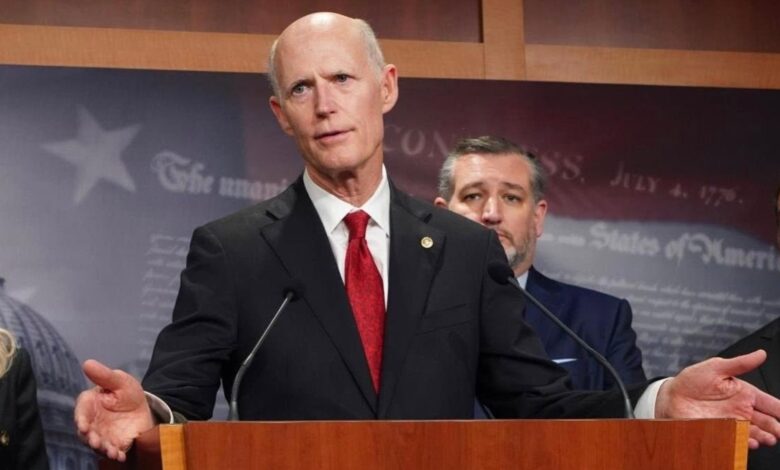
Florida – Florida Sen. Rick Scott is pushing harder than ever for Senate action on a controversial election bill, placing himself at the center of a growing national debate over voting rules, election security, and access to the ballot box ahead of the 2026 midterm elections.
At the heart of the fight is the SAVE America Act, legislation backed by President Donald Trump that would require individuals registering for federal elections to provide documents proving U.S. citizenship. The proposal would also strengthen voter identification requirements and direct states to take additional measures aimed at finding and removing noncitizens from voter rolls.
Scott has become one of the bill’s most vocal supporters, arguing that election integrity should be an issue that unites Americans regardless of political affiliation. In a recent social media post, the Florida Republican declared, “The one thing that the Republicans, Democrats, and Independents have in common is we ALL want the SAVE America Act passed. Let’s GET THIS DONE and SECURE OUR ELECTIONS.”
His message reflects a broader Republican effort to make election security a major issue heading into the next national election cycle. Many conservatives argue that voters should be required to verify both their identity and citizenship before participating in federal elections, saying such safeguards would strengthen public confidence in the voting system.
Yet while the message has energized many Republican voters, the road to passing the legislation remains difficult.
A Senate battle with major political stakes
The SAVE America Act has become one of the most closely watched election-related proposals in Washington. Supporters describe it as a practical way to ensure that only eligible citizens vote in federal elections. Opponents, however, see it as a significant change to voter registration rules that could create obstacles for many lawful voters.
The Senate presents the bill’s biggest challenge. Republicans do not currently appear to have enough Democratic support to overcome the chamber’s 60-vote filibuster requirement. As a result, even strong backing within Republican ranks may not be enough to move the legislation forward.
That reality has created a complicated political situation. Scott and other conservatives continue making their case publicly, while Senate leaders quietly assess whether enough votes exist to advance the measure. At the same time, some Republican leaders have shown little interest in altering Senate rules to make passage easier, despite increasing pressure from Trump and his allies.
The disagreement is unfolding as both parties look toward the 2026 midterm elections, where control of Congress could be decided by narrow margins in a small number of states.
What the bill would change
One of the proposal’s most debated provisions would require people registering to vote in federal elections to provide documentary proof of citizenship. Acceptable documents could include a passport, birth certificate, naturalization paperwork, or other approved records.
Supporters say this requirement would establish a consistent national standard and help reassure voters who question the integrity of elections. They also point out that identification is commonly required in many everyday situations, arguing that voting should not be treated differently.
Critics do not dispute that only citizens should vote. Instead, they argue that noncitizen voting in federal elections is already illegal and uncommon. Their concern centers on whether the new requirements could make registration more difficult for eligible Americans.
Voting-rights advocates warn that people who have changed their names after marriage, relocated, misplaced important records, or lack current documents could encounter additional challenges. Concerns have also been raised about possible effects on rural residents, senior citizens, students, low-income communities, tribal populations, and naturalized citizens.
The debate has become especially intense because election systems differ widely from state to state. Some states already enforce voter ID requirements, while others use different methods to verify eligibility. Supporters view a national standard as a way to create consistency, while opponents see it as unnecessary federal involvement in state-run elections.
More than just one piece of legislation
The growing dispute extends beyond the details of the SAVE America Act itself. Republicans believe the issue gives them an opportunity to campaign on election security and portray Democrats as opposing basic safeguards. Democrats, meanwhile, argue that Republicans are trying to make voting more difficult while addressing a problem they say has limited evidence behind it.
That political calculation explains why both parties are investing so much energy into the issue.
Trump has also elevated the stakes by making the bill one of his priorities. Reports have suggested he has sought to connect the proposal to other major legislative efforts, including matters involving national security. While that approach increases pressure on lawmakers, it has also generated frustration among some Republicans who prefer to keep separate policy debates from becoming intertwined.
For Scott, however, the strategy remains clear. Keeping attention focused on election security allows Republicans to rally supporters and keep a key campaign issue in the spotlight before voters head to the polls.
As the 2026 midterms draw nearer, the fight is expected to become even more heated. Questions about voter registration, identification requirements, turnout, election administration, and public confidence are likely to remain central topics in political campaigns across the country.
For now, Scott has succeeded in keeping the SAVE America Act in the national conversation. Whether that effort ultimately leads to a legislative victory is another question entirely. The bill may enjoy strong support among many conservatives and voters who favor stricter election rules, but the Senate remains a place where political momentum often collides with procedural obstacles.
With both parties convinced they hold the stronger argument, the battle is far from settled. In many respects, it is only entering its next phase, setting the stage for a broader national struggle over election rules long before a single vote is cast in the 2026 midterms.


