
“It’s bad. It’s nightmare for Republicans”: Dems would destroy GOP and Trump is in the center of the issue, analyst claims

Florida – Florida Republicans are confronting an unusual warning sign heading into the 2026 midterms, as a series of recent polls suggests the party’s once-comfortable grip on statewide politics may be loosening.
Democratic-backed surveys show major races for governor and the U.S. Senate tightening to within the margin of error, with much of the movement tied to independent and no-party-affiliation voters increasingly frustrated by the cost of living.
Housing prices, property insurance and taxes have emerged as potent sources of discontent, cutting into the sense of political stability that had helped define the GOP’s rise in the state.

Democrats have added to that narrative with a string of special-election victories in legislative contests, fueling fresh arguments that Republican momentum may be fading even as the party retains a sizable voter-registration advantage.
Florida Republicans still hold a clear numerical edge, with more than 5.5 million active voters compared with about 4 million Democrats, but raw registration strength no longer appears to tell the full story.
The deeper concern for the GOP is that voter anxiety over the economy, coupled with President Donald Trump’s negative ratings on key issues, could make Florida more competitive than many in the party expected.
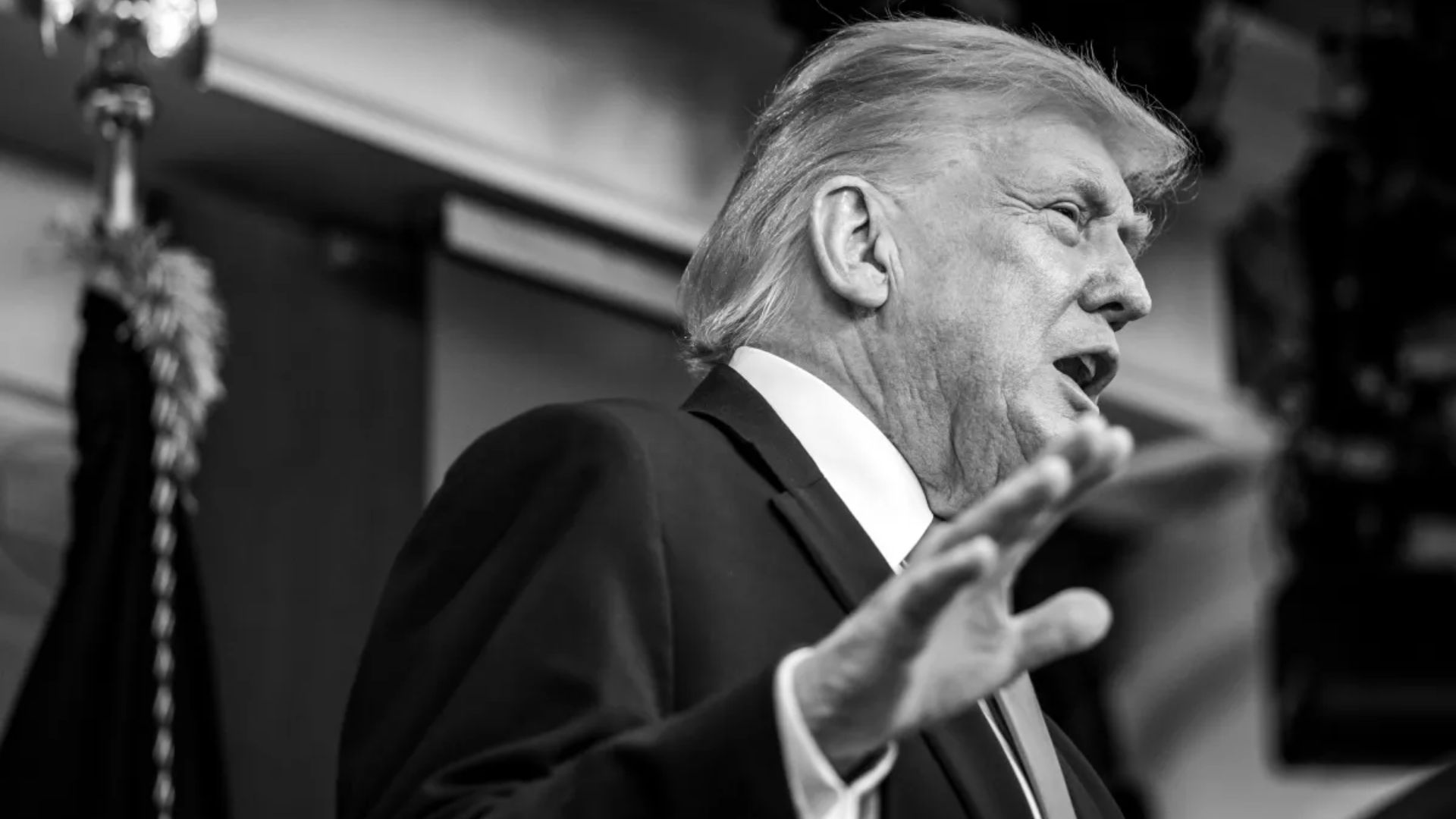
Now, a fresh warning is hanging over Donald Trump and the Republican Party, and this time it is not coming from a campaign rival or a Democratic strategist.
It is coming from a CNN analyst who says the numbers are starting to point in a direction Republicans may not have expected. With Trump’s approval ratings sliding and control of Congress becoming more uncertain, the political picture around his second term appears to be shifting in ways that could create serious trouble for his party.
The warning centered on the Senate, a chamber Republicans would normally hope to defend more comfortably.
But according to CNN data analyst Harry Enten, recent polling and prediction-market movement suggest that the map is becoming far less favorable for the GOP.
In remarks highlighted by The Daily Beast and discussed on CNN’s Erin Burnett OutFront, Enten said Democrats are no longer merely narrowing the gap. In his reading of the numbers, they have moved into a position where they now hold a slight edge.
That change, he suggested, is what makes the moment so striking. At the start of the year, Democrats were sitting at just 33 percent odds of taking control of the Senate, based on the Kalshi prediction market. Now that figure has climbed to 54 percent.
Enten described that shift in blunt terms, calling it a “nightmare” for Republicans. He stressed that Democrats have not just improved; they have kept advancing across the board, turning more seats into real battlegrounds and expanding the range of states now seen as competitive.
“It’s bad,” Enten said.
“It’s like a nightmare for the Republicans. The Democrats just keep gaining and gaining and gaining when it comes to the Senate odds.”
“Democrats haven’t just gained on Republicans, they actually have the majority chance at 54 percent, and that’s fairly close to a toss-up,” he added.
“We all thought that the House was gonna go to the Democrats, but the Senate as well? Oh, boy. My goodness gracious.”
For Republicans, that is the kind of movement that can quickly change the entire mood of an election cycle. A Senate majority once thought safer now appears much more fragile. Enten said he already believed Democrats were in a strong position to win back the House, but he admitted that the Senate becoming this vulnerable was not something he had expected.
That surprise is part of what gave his warning extra weight. The issue is no longer limited to one chamber or a few weak candidates. It is becoming a broader story about momentum, and right now that momentum appears to be moving away from Trump’s party.
At the center of it all is Trump himself.
The President’s approval rating, according to the context surrounding Enten’s analysis, has dropped sharply since the beginning of his second term.
The shift has been described as a 35-point change, a dramatic fall that has raised new concerns about the political cost of recent events. Much of that decline has been tied to growing tensions involving the United States and Iran, a conflict that has pushed oil prices higher and added new economic anxiety to an already tense political environment.
That matters because rising energy costs tend to reach voters quickly and personally. Foreign policy fights may begin overseas, but they often land at home in the form of higher prices and public frustration. When that happens, approval numbers can deteriorate fast, especially for a president already facing scrutiny on multiple fronts.
The recent backlash has also been linked, at least in part, to Trump’s criticism of Pope Leo, another controversy that may have added to the strain on his public standing. On its own, one flashpoint might be survivable. But with falling approval, Senate vulnerability, and a House landscape that already looks difficult for Republicans, the picture becomes much darker.
What makes this moment politically potent is not just one bad poll or one dramatic quote. It is the sense that several warning signs are starting to align at once. If those trends continue, the “nightmare” Enten described may stop sounding like a television soundbite and start looking like a real electoral threat for Trump and the Republican Party.


