
“Thankfully, we live in Florida”: Jared Moskowitz reacts to New York’s socialist victories—even as one prepares to challenge him in his own district
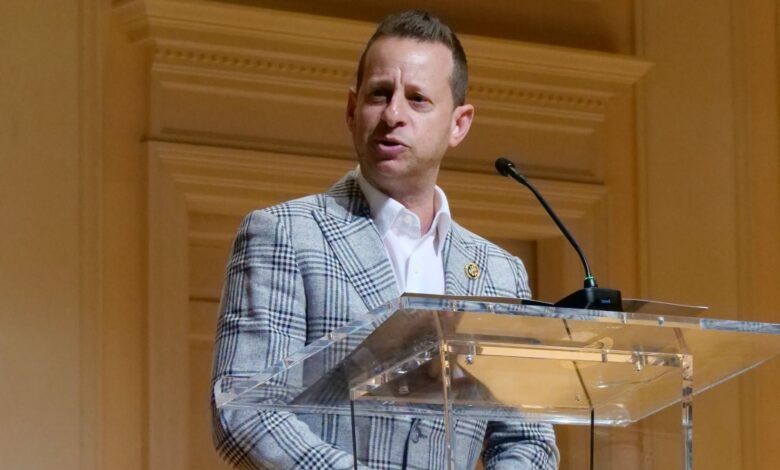
Florida – Florida Democratic Rep. Jared Moskowitz offered a blunt reaction to the recent wave of Democratic Socialist victories in New York, arguing that the results reflect the growing influence of the Democratic Socialists of America (DSA) while expressing relief that Florida has not followed the same political path. His remarks, however, come as he prepares to defend his own congressional seat against a challenger who openly identifies as a Democratic Socialist.
Speaking on CNN’s The Situation Room on Wednesday, Moskowitz reflected on Tuesday’s New York primary elections, where three socialist-backed candidates defeated more established Democrats in contests that caught many within the party by surprise. Rather than celebrating the outcomes, the Florida congressman described them as another sign that the DSA has continued expanding its reach in New York politics.
“We’re going to lose two good members in New York that, you know, one had served for four years, one had been there for 10 years,” Moskowitz said.
He noted that election results often reflect the political makeup of individual districts, pointing out that different parts of the country produce very different kinds of candidates.
“But this is what elections are about, right? I mean, New York City is different than Florida. Florida is different than California. Texas is different than New York. People get elected in different areas. We have districts there that are, I don’t know, D20s, D30s, D40s. So the primary is what matters. Obviously, they’re very progressive seats. The DSA has been increasing their power in New York.”
Florida comparison comes with an ironic twist
Moskowitz went further by contrasting New York’s political direction with that of his home state.
“They have a mayor, and he’s obviously flexing his power. Thankfully, we live in Florida, and we don’t have Democratic socialists like they have in New York. And, you know, like, that’s something that people in New York are going to have to decide whether, you know, they want to stay there and deal with those policies or leave.”
His comments came after New York congressional candidates Brad Lander, Claire Valdez and Darializa Avila Chevalier each secured upset primary victories. Their campaigns emphasized a socialist economic platform, opposition to Immigration and Customs Enforcement, and a strongly critical stance toward Israel. All three candidates also received endorsements from New York City Mayor Zohran Mamdani, whose own political rise has drawn national attention.
Although Moskowitz said Florida does not have Democratic Socialists like those gaining influence in New York, he is set to face one in his own congressional primary.
His August opponent, Oliver Larkin, describes himself on his campaign website as “an activist, union organizer, and proud Democratic Socialist.” Larkin also highlights his past work as a volunteer on Sen. Bernie Sanders’s 2016 presidential campaign, aligning himself with one of the country’s most recognizable progressive political movements.
The contrast between Moskowitz’s remarks and his upcoming primary has added another layer to the discussion surrounding the Democratic Party’s ideological divide. While some Democrats have embraced the growing influence of progressive and socialist-backed candidates, others have expressed concern that the movement is reshaping the party in ways that may not appeal to voters outside heavily Democratic districts.
Moskowitz’s comments also underscore the regional differences within the Democratic coalition. He argued that what succeeds politically in New York City should not automatically be viewed as a model for states like Florida, where voters have historically favored more moderate or centrist candidates.
At the same time, the presence of a self-described Democratic Socialist challenging Moskowitz illustrates that debates over the party’s future are no longer limited to traditionally progressive states. Even in Florida, where the congressman argued such politics have not taken hold in the same way, ideological divisions within the Democratic Party are now becoming part of local primary contests.
As Democratic Socialists continue scoring victories in some of the country’s most liberal districts, races like Moskowitz’s will likely draw attention as another measure of how far the movement can expand beyond its traditional political strongholds.


